Taiwan students dive into Edge AI with the UNO Q
One of our key goals at Arduino Education has always been to help turn complex, abstract concepts into accessible and hands-on learning experiences.
AI is one of those technologies that can often feel intimidating or out of reach. So it was exciting to see that barrier disappear during the recent Qualcomm and Arduino Edge AI Application Development Workshop series in Taiwan.
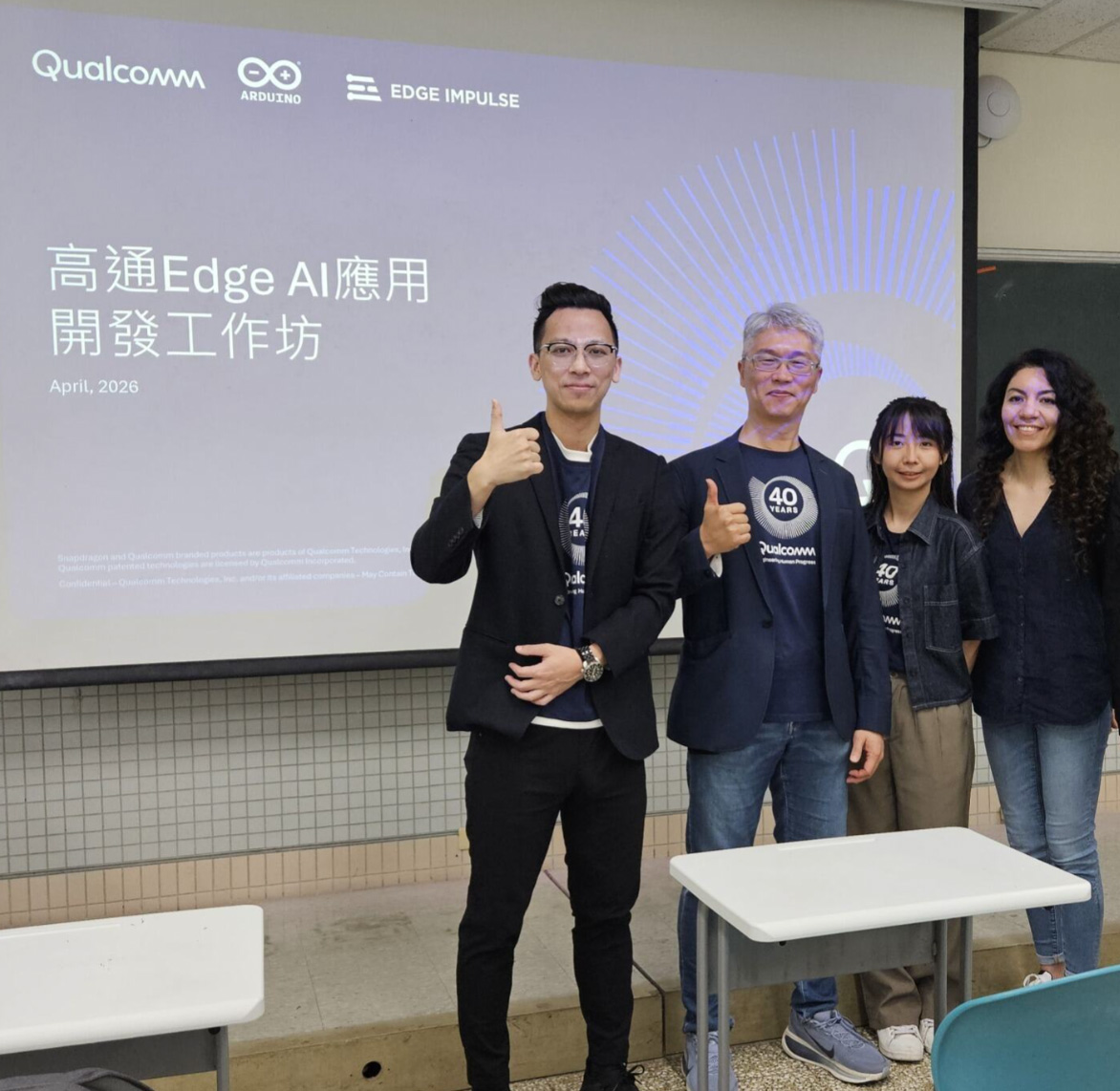
Delivered as part of Arduino Days 2026, the workshops saw developers and students dive into hands-on AI development using the UNO Q, App Lab, and Qualcomm AI Hub.
The event reinforced something we have long believed: when students get access to the right tools, AI and embedded systems stop being abstract ideas and become real, buildable skills.
Why this matters for education
Today’s students are growing up in a world filled with smart devices, robotics, and AI-powered technology. But learning how those systems actually work can still feel intimidating – especially when hardware, software, and AI are often taught separately.
The Arduino UNO Q changes that. It is the first Arduino UNO‑form‑factor board that combines:
- A real-time MCU for deterministic hardware control
- An MPU/Linux environment for Python and AI
- Internal communication between both systems on a single board
- A unified development experience.
In other words, students get hands-on experience with exactly the kind of hybrid architecture that’s used in modern robotics, autonomous systems, and smart devices.
What did the workshops entail?
Across the series of workshops, we worked with a total of 225 students from the ****National Taipei University of Technology (NTUT), National Central University (NCU), and National University of Kaohsiung (NKU) in southern Taiwan.
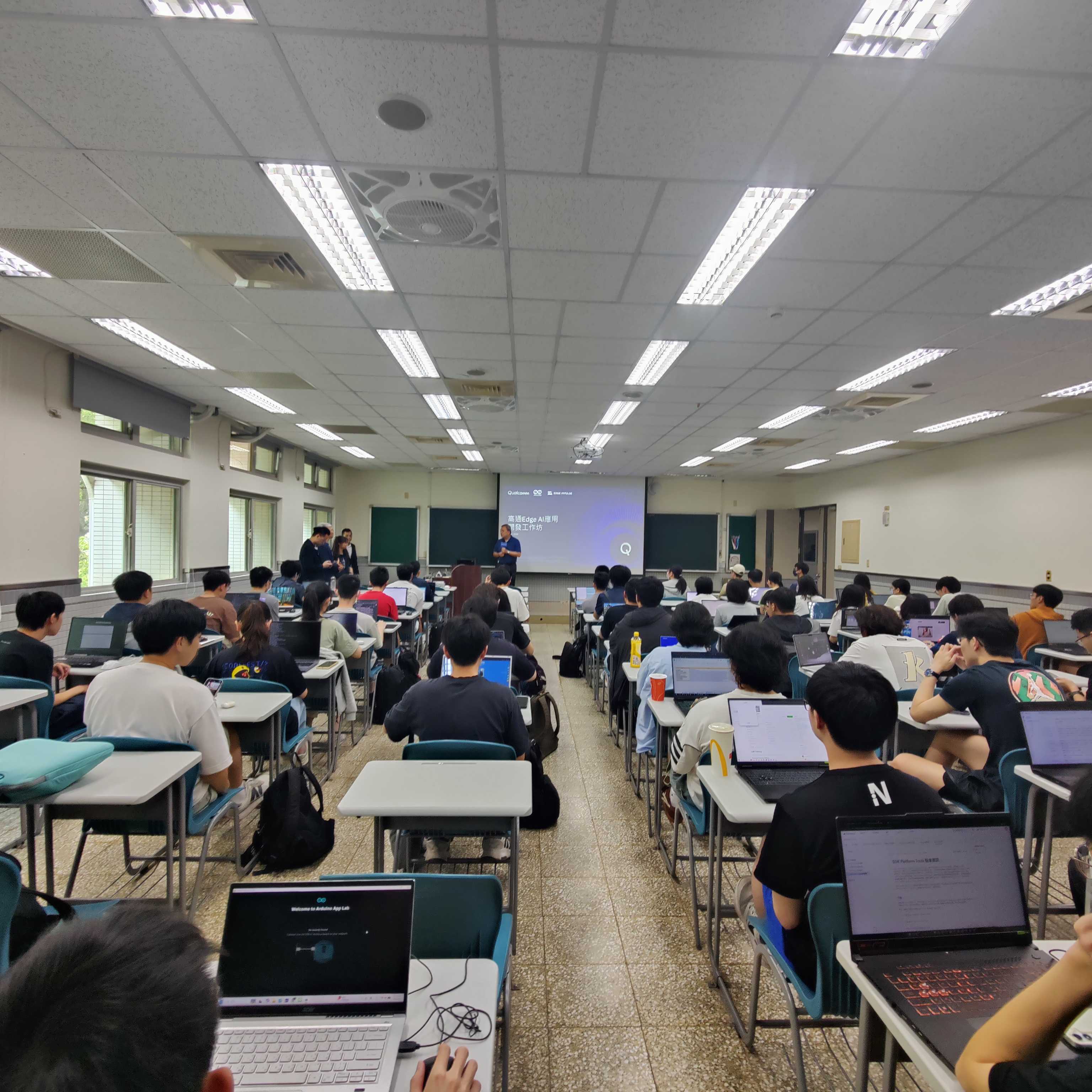
One of the most exciting parts of the event was seeing how quickly students gained confidence. Even those with little or no prior AI or embedded systems experience were soon able to:
- Explore the UNO Q through an introductory hands‑on session
- Try the examples on App Lab
- Understand the use of Bricks
- Collect data and train an AI model in Edge Impulse
- Deploy that model directly onto the UNO Q.
And thanks to the integration between Edge Impulse and UNO Q, students could go from idea → dataset → trained model → running AI application in a single workflow.
Why App Lab is a game changer for the classroom
For many educators, one of the biggest challenges in teaching AI and robotics is complexity. Multiple tools, setup issues, and steep learning curves can quickly become barriers in the classroom.
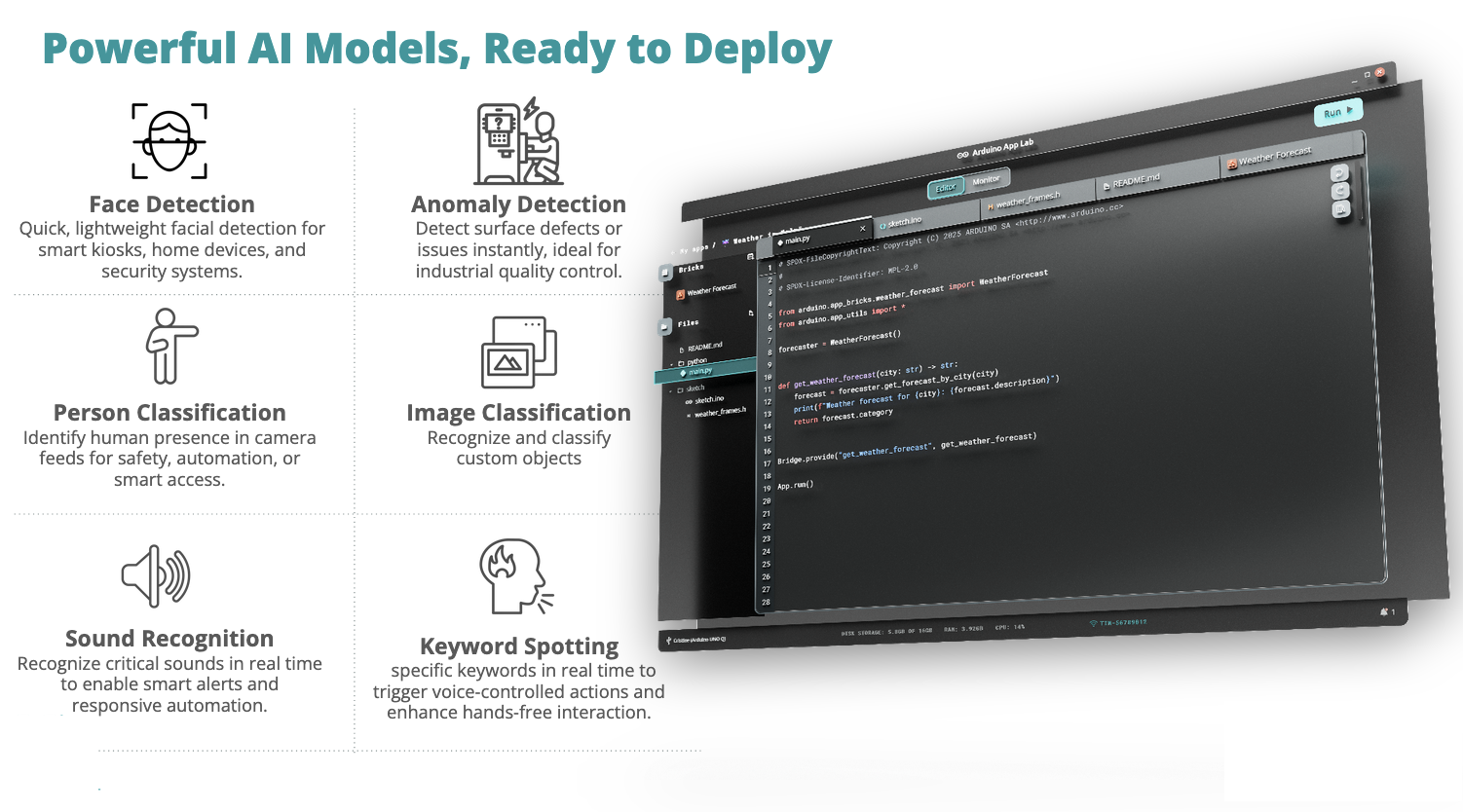
That’s where App Lab makes a huge difference. App Lab is not just an IDE – it’s a full learning platform that makes advanced learning accessible. Rather than forcing students to jump between multiple development tools, App Lab brings everything together into one streamlined learning platform with:
- Guided learning experiences
- Integrated Python and Arduino workflows
- Ready-to-use examples and tutorials
- Hardware integration through “bricks”
- A structured path from beginner to advanced projects.
This significantly reduces classroom friction for teachers and lowers the barrier for schools introducing AI and robotics programs for the first time.
For teachers, this means no setup headaches. For students, it means instant creativity. It really is a win-win!
Preparing students for real world careers
Modern industries no longer separate software, AI, and hardware engineering into isolated disciplines, and neither should educators.
Students entering the workforce will increasingly encounter systems that combine:
- Embedded electronics
- Real-time control
- AI inference
- Robotics
- Edge computing.
Real-world products require engineers who understand how intelligent software interacts with physical systems, so it stands to reason that students who can master this will have a huge advantage in any future engineering and technology career.
The UNO Q plays a key role by introducing students to these concepts years earlier than traditional university pathways do. This enables them to develop their understanding long before they even enter the workforce.
Strengthening the local developer ecosystem
The Qualcomm and Arduino Edge AI Application Development Workshops showed exactly what’s possible when students are given access to the right tools and real-world technology, along with the space and freedom to experiment.
By the end of the day, even students with little or no prior experience of artificial intelligence were training AI models in Edge Impulse and deploying them directly onto real hardware. By enabling this kind of hands‑on AI education with Arduino UNO Q, we’re helping build the next generation of innovators who will shape the future of embedded AI.
Want to know more about how the UNO Q and App Lab can benefit your students? Head to the website for more information.