Tech without borders: how TME Education is transforming communities with Arduino
In parts of the world where access to quality electronics education and modern technology is still a major challenge, one initiative is working to close the gap.
TME Education, a project by Transfer Multisort Elektronik (TME), is on a mission to make technical education more accessible in regions where it’s needed most – including countries across Africa and India. The program is designed to engage and inspire young people to change their reality using technology, creativity, and hands-on learning. But it’s not just about individual growth – it’s about creating a ripple effect of positive change throughout entire communities.
As part of their incredible work, TME Education have taken the popular Arduino Uno REV 3 board and developed their own educational kit around it. The goal? To make learning electronics and microcontroller programming both simple and fun, so that students can gain valuable skills quickly and confidently – regardless of their background.
We caught up with Kresna Trojner to learn more about how TME Education is making a difference – and how Arduino technology is helping to support a new generation of lifelong learners.
Arduino: Why did TME Education launch training programs in Africa and other developing regions?
TME Education: When establishing the TME Education project in 2016, we wanted to address the problems faced by communities in developing regions.TME, operating internationally and in contact with customers worldwide, has decided to enable that regions with limited access to electronics also have access to knowledge and technological equipment that can significantly improve the quality of life and provide opportunities.
Through training conducted as TME Education, we provide workshops for all those who, for various reasons, were excluded from the educational process. Our goal has always been to improve the lives of local communities so that they can practically transform their skills into tangible benefits for themselves, their close ones, and their surroundings.
“Our goal has always been to improve the lives of local communities”
Arduino: What specific challenges in these communities are you trying to address through technology education?
TME Education: The challenges we face and try to counteract are various. First of all, we want to reach places where people are excluded from the education system for various reasons. The unbalanced development of many places means that the differences in individual countries are huge. Between large cities, capitals of given countries, and rural areas, we can see a huge gap in material status, and consequently, in access to knowledge and equipment.
We also want to counteract any exclusion based on gender or age. Our workshops are attended by girls and women who find their way perfectly in the electronics and technology space, and their point of view and skills are unmatched. Plus, we strive to combat the challenge of stereotypical approaches to electronics and prove that this is a field for everyone, regardless of gender, age, or level of advancement. Everyone is welcome.
The heart of the project is community and collaboration – "Together We Go Further" guides efforts to connect with participants through ambassadors and tutors. Diversity and inclusion are key, as the project navigates language, cultural, and logistical challenges, especially in rural areas. Strong organization is also essential, with nearly 40 people across Africa and India relying on evolving systems for communication, resource distribution, and coordination of workshops.
Arduino: Why did you choose Arduino for your educational programs, and what advantages does it offer in your training model?
TME Education: Arduino, being a company specializing in, among others, the production of programming boards, is a global company with a good reputation and is known all over the world. Its products are famous for their quality and versatility. The durability and stability of Arduino products is crucial for our initiative. Arduino technology provides safety for users in different environments. Hot summer day? No problem. Unstable Internet connection? You can use essential functionality offline.
The other important quality of Arduino products is the easy-to-learn and inviting interface, which can help with understanding the basics of coding – even for those who aren’t familiar with technical engineering.
““The durability and stability of Arduino products is crucial for our initiative””
Arduino: How was the TME-EDU-ARD-2 board developed, and how is it different from a regular Arduino board?
TME Education: Our educational board is based on the Arduino UNO board. We wanted to maintain the functionality it provides, but also add some elements that would adapt it to the conditions of training conducted outside of standard classrooms in schools. Our workshops in Africa and India are characterized by dynamics, a large number of students, and the fact that we move to different parts of the country – often with suboptimal infrastructure. This means that we had to take the initiative to adapt the Arduino UNO board to local conditions. Our board is durable, resistant to transport, and easy to use.
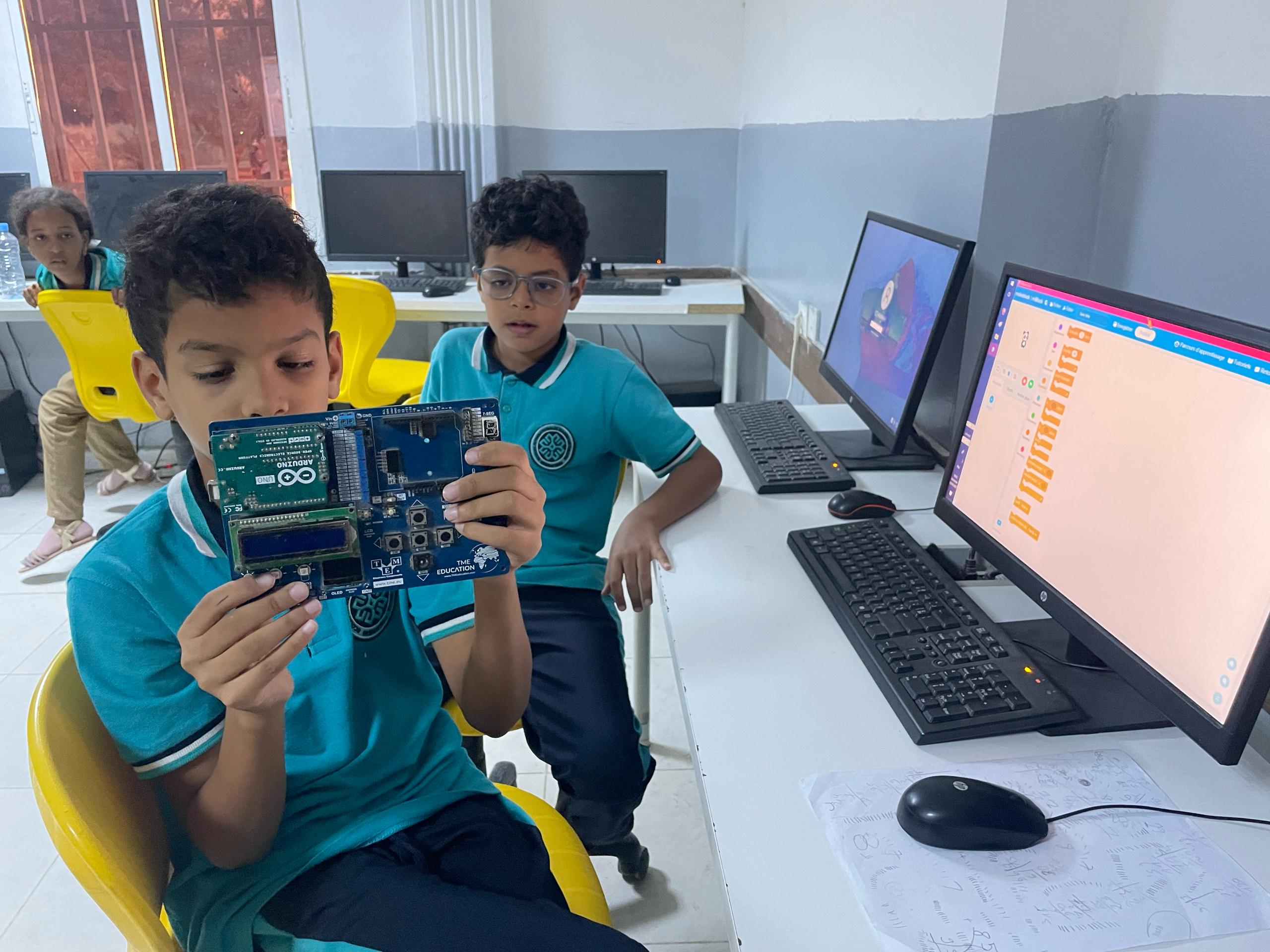
The educational board finds its place in almost all the workshops we run. Due to the fact that it is easy and intuitive to use, it often appears in primary schools, where beginner electronics and programming enthusiasts are just entering the world of technology. However, it is not intended exclusively for them. It is also perfect for creating more complex and advanced projects, which is why it is also great at universities, where advanced users can utilize it successfully.
Arduino: What kind of impact have you seen among students or local educators/communities so far? Can you share one or two real examples?
TME Education: The impact of our workshops is primarily embedded in everyday life. We try to enable that students gain as much practical knowledge as possible from the lessons and that they can change their immediate surroundings and apply their new skills to the job market in order to turn this into tangible earnings. Learning in practice, such as during our workshops in Uganda on electricity, in Kenya during lessons on solar energy and installing solar panels, or also repairing mobile phones, are excellent examples of how technology can change everyday life.
Another type of activity with a tangible impact is our internal Community Changemakers initiative. During several editions of this event, our employees have identified many important problems that local communities struggle with and, using electronics and broadly understood technology, they found a solution, created it, and applied it to reality. Projects such as an agricultural remote irrigation system, an egg incubator, a home garden with soil parameter control, or a system for detecting cigarette and vape smoke are just a few of many interesting solutions.
“The impact of our workshops is primarily embedded in everyday life.”
Arduino: How do you run these training sessions on the ground? Do you work with local schools or train-the-trainer models?
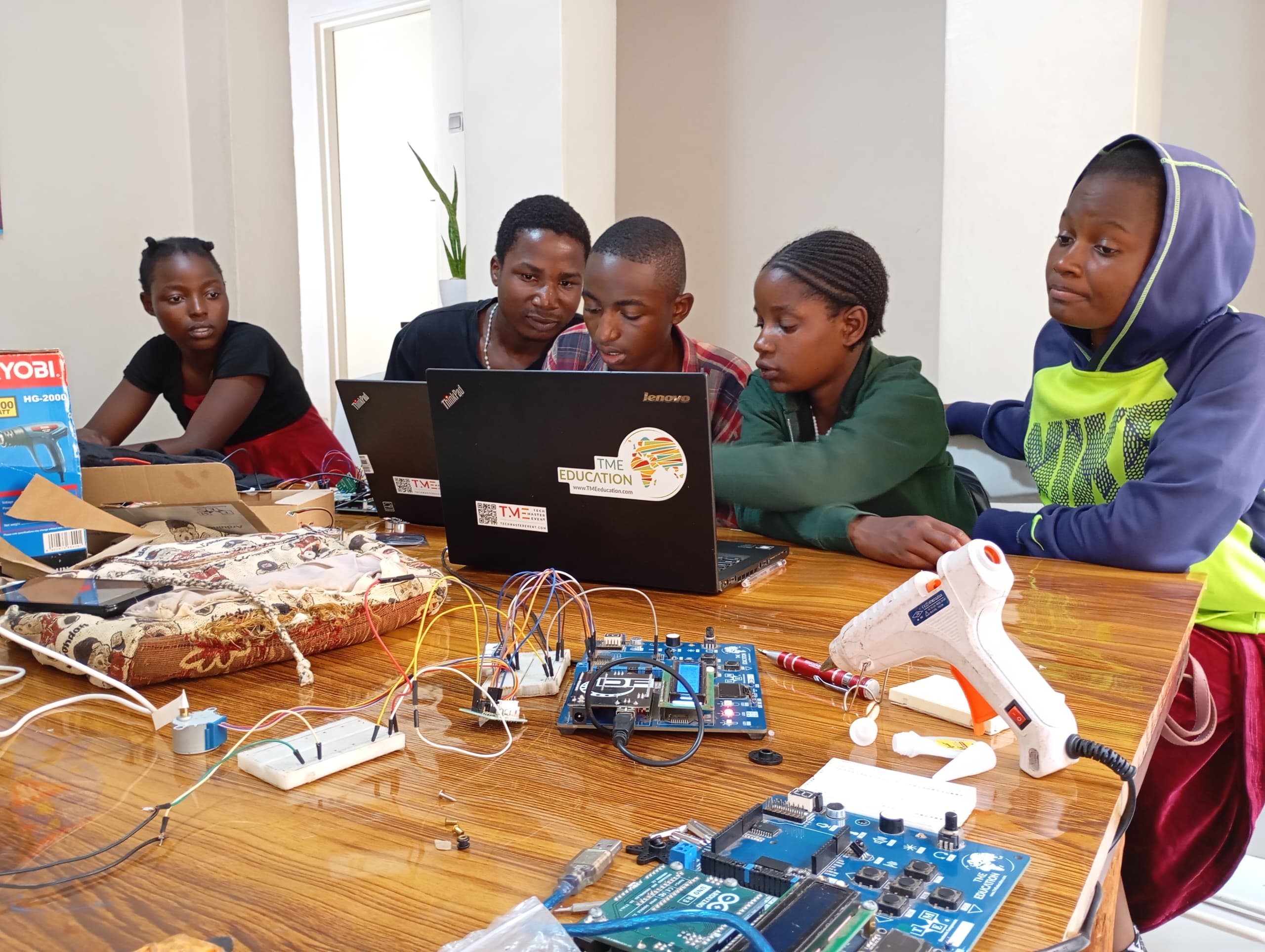
TME Education: Our educational workshops are conducted by our qualified and irreplaceable employees. They are natives of their countries and communities. This gives them the best insight into the needs of their society and the problems it faces. Our employees, divided into ambassadors and tutors, are educated in the fields of electronics and programming, and the classes they conduct are focused on a practical approach, by providing equipment on which students can learn immediately during classes.
Classes are conducted stationary in local Makerspaces or by periodically visiting schools and educational institutions, from primary schools to universities in different parts of the country. In addition, we also cooperate with schools on a sponsorship basis. We support institutions with insufficient funds for electronic equipment by providing kits and components they can use to equip their designated classrooms.
Arduino: What are your next goals? Will you expand into new regions or develop more tools with Arduino?
TME Education: Our goal for the coming years is to strengthen the positive impact and educational network that we have managed to build so far. The process of providing knowledge and equipment is long and meticulous, and there is never a lack of people willing to learn. That is why we do not want to rush the process at the expense of its quality. Nevertheless, we do not rule out further activity in other regions, because there is no shortage of people excluded from the educational cycle all over the world.
You can read more about the TME Education project here.