Spot the Bot! Building AI Awareness with Arduino® UNO™ Q board
Preparing students for the challenges of AI and misinformation
As artificial intelligence reshapes how information is created and shared, universities are increasingly challenged to equip students with the technical skills—and critical thinking—needed to navigate an AI-driven world.
At Malmö University, students in the Interaction Design master's programme explored this challenge by developing Bot or Not?, an interactive installation that is design to transform the abstract concepts of AI-generated misinformation and social media manipulation into a tangible learning experience.
The project was selected for UNFOLD 2026 during Milan Design Week, where it showcased how interdisciplinary design education can combine emerging technologies, physical computing, and societal challenges into impactful student work.
▶ Watch the installation in action and see how students turned a complex AI concept into an engaging, hands‑on experience.
Learning through interdisciplinary project-based education
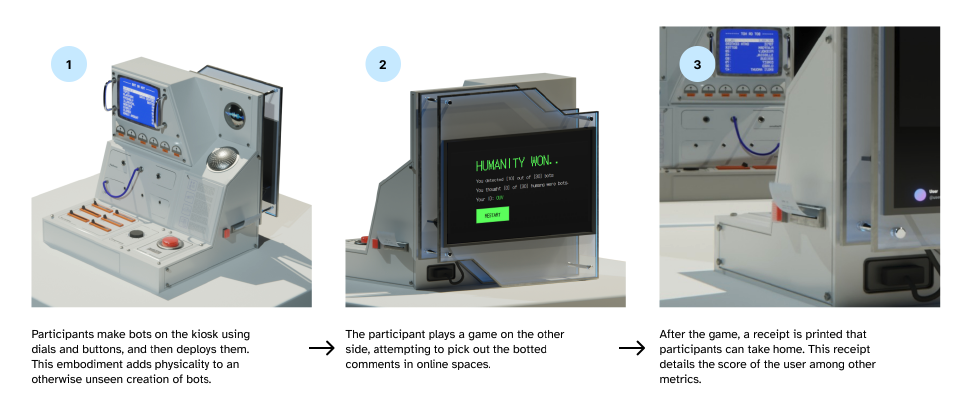
Rather than approaching misinformation as a purely theoretical topic, the students designed an interactive system that allows participants to experience both sides of AI-powered information manipulation.
Players alternate between two roles:
- configuring an AI-powered bot network using physical controls
- moderating a simulated social media feed to identify AI-generated content
By experiencing both perspectives, users can gain a deeper understanding of how large language models can be influenced and how online conversations can be manipulated.
The project demonstrates how physical computing can make complex digital systems easier to understand, encouraging discussion around AI ethics, digital literacy, human-computer interaction, and responsible technology design.
Why UNO Q?
The project required a platform capable of integrating multiple sensors, physical controls, displays, and real-time communication into a responsive interactive installation.
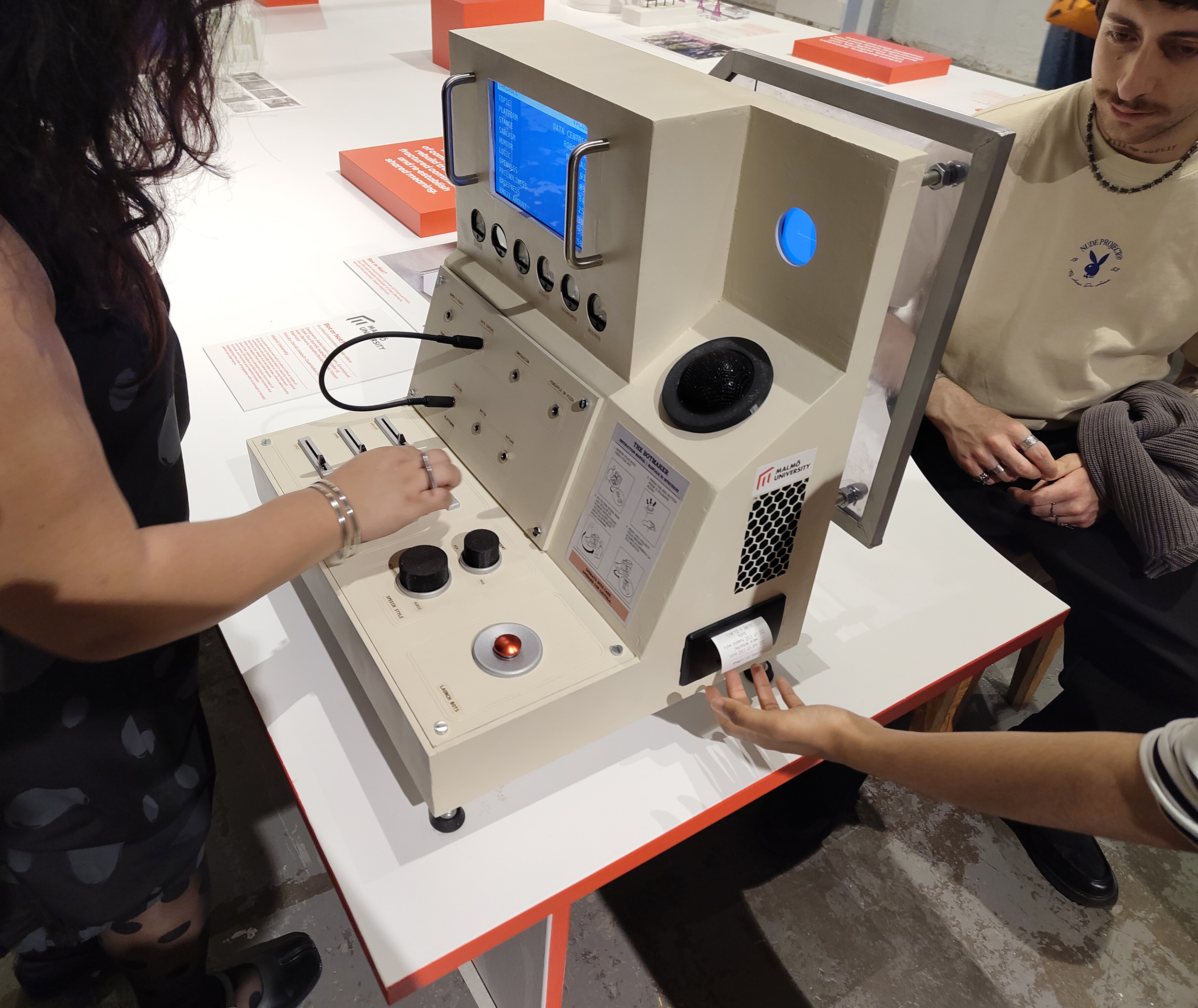
Using the UNO Q, students built a custom control console featuring sliders, rotary encoders, buttons, switches, and analog VU meters that communicate seamlessly with a touchscreen interface.
The board was built to provide:
- Sufficient processing power for responsive interaction
- Multiple hardware interfaces for connecting diverse peripherals
- Dual I²C buses to help simplify communication between sensors and displays
- Reliable serial communication between the physical interface and graphical application
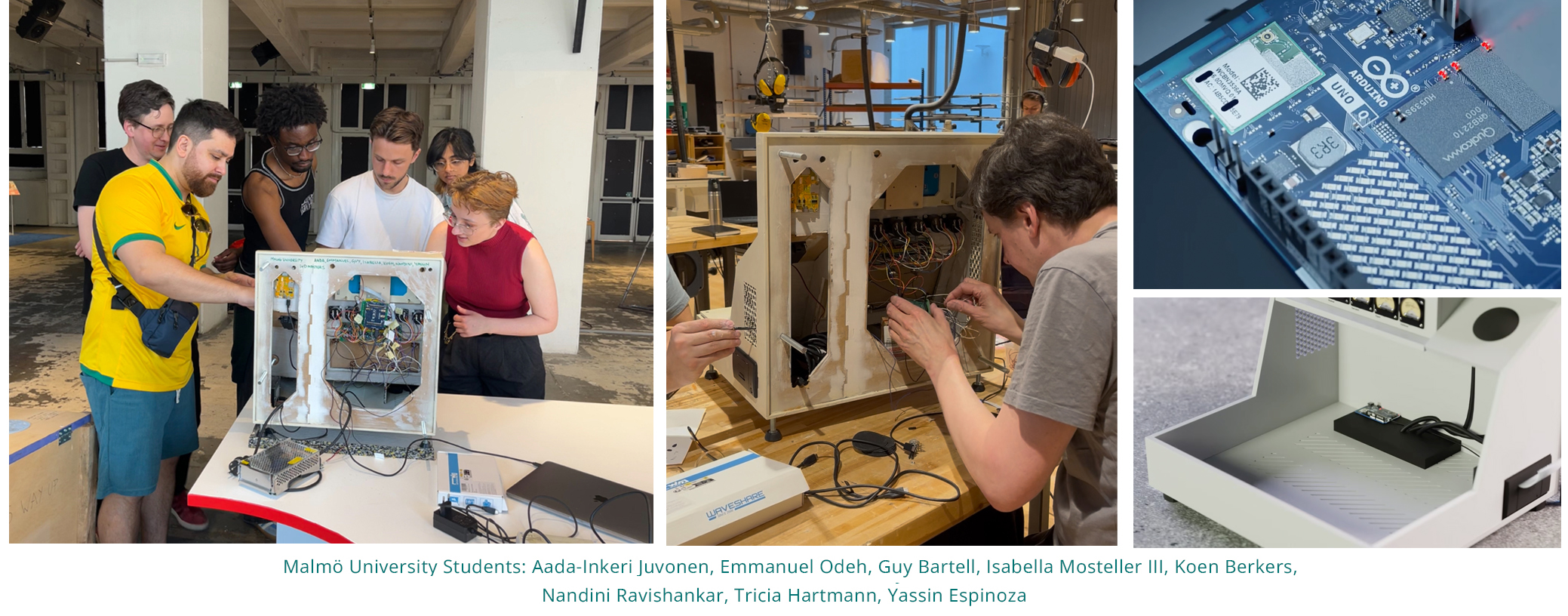
As project team member Guy Bartell explained:
"Having the Qualcomm Dragonwing™ processor running a GUI in Debian Linux through the LCD screen [...] and the STM32U585 for sensor reading and controlling the VU meters, created a versatile system that gave a very smooth user experience."
The hardware architecture was also structured to allow students to separate sensor input from display control while powering numerous connected devices from a single platform.
Developing both technical and human-centred design skills
Projects like Bot or Not? are about much more than programming and electronics.
Alongside developing technical skills, the project encouraged the students to step out of the purely digital realm and think about how physical actions influence cognitive understanding. Apart from learning hard technical skills—such as serial communication, circuit design, and Arduino programming, they also developed a critical mindset and learned to approach problems with curiosity, creativity, and structured thinking.
And that wasn't the only lesson. "Building a tangible interface for a complex societal issue like misinformation requires deep empathy for the user and a strong grasp of narrative design," Guy explained. "It teaches you how to translate abstract algorithms into physical affordances that people can actually touch, feel, and understand intuitively."
Empowering the next generation of AI-literate designers and engineers
Bot or Not? demonstrates how the UNO Q helps universities to move beyond traditional programming exercises and create interdisciplinary learning experiences that combine hardware, software, design, and critical thinking.
By building tangible systems around real-world challenges, students not only develop technical competence but also learn how technology influences society—preparing them to design more responsible, ethical, and human-centred AI systems in the future.
Feeling inspired? Explore the UNO Q to discover its full capabilities and see what you can create or head straight to the store to order yours today.