An essential element of education
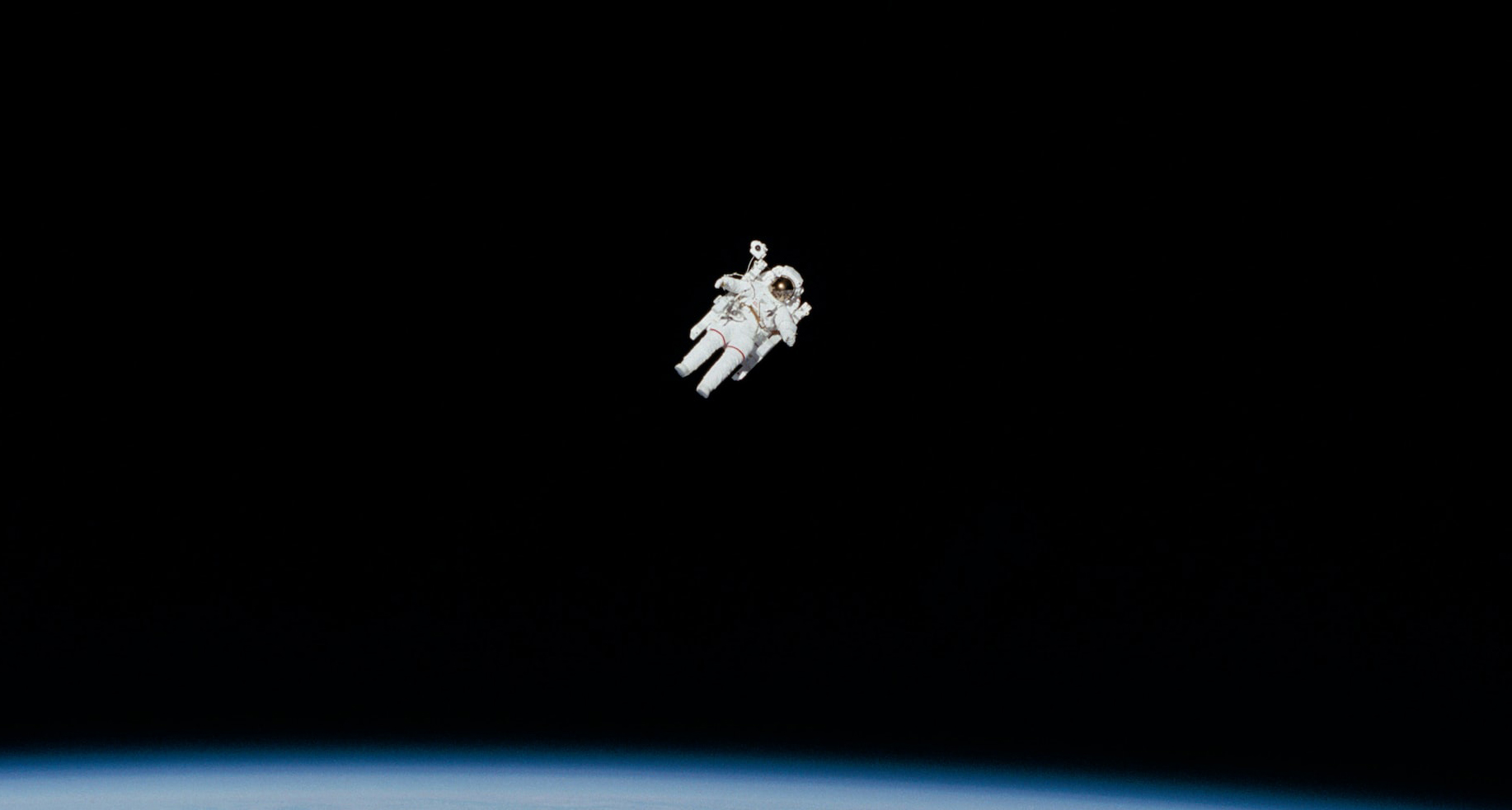
All aspects of space are vital to the science component of STEM education, with the historic space race battle between the US and the Soviet Union providing a pivotal point for educators to drive forward the engineering aspects and show students how STEM innovators have shaped the exploration of space.
Aiming to show superiority in spaceflight, the space race saw a series of competitive technology demonstrations take place. Kicking off with the launch of the Soviet Satellite Sputnik 1 in 1957, and culminating in the 1969 peak when NASA landed astronauts Buzz Aldrin and Neil Armstrong on the moon in their Apollo 11 Mission, the space race marked an exciting new era of capabilities and connection.
Aside from the obvious aspect of innovation, students can learn a wealth of important lessons from this 12-year-long engineering feat, such as how using your competitors’ designs can sometimes help you improve your own, complete success isn’t likely to happen with a first attempt, and that when an experiment fails or causes catastrophic damage, like the Apollo 1 tragedy, it can be used to avoid the same fate in future designs.
Space themed lesson plans
If you are teaching natural science, algebra or other core STEM subjects, it would be relatively easy to prepare lesson plans that have space as the theme. Your students are likely to be hooked by the lesson! You can design your lesson plan to trigger their curiosity about space. For example, you might show them a short documentary about the possibilities of complex life existing elsewhere in the universe.
Depending on your subject or topic, you can integrate interesting facts about space in your direct instructions or lecture. For instance, if your topic is about the nervous system, you might discuss how the nervous system of an octopus is “alien” compared to a mammal’s nervous system.
You could also include questions in your assessment of your students about their speculative ideas for space exploration and colonization. The questions can be tailored in such a way that will apply the concepts in your lesson.
Space-Themed Science Experiments
Conducting space-themed science experiments doesn’t necessarily mean performing the experiments in outer space or in orbit inside the International Space Station!
Your experiments could simulate certain conditions in outer space, thereby demonstrating certain scientific concepts. It could be as simple as using a plastic water bottle, vinegar, and baking soda to demonstrate the principles of rocket propulsion. Or, it could be something more sophisticated, such as using electronic kits to demonstrate flight control.
Putting it into practice
So, how can we use the many learning curves and engineering advancements exhibited in the space race to design effective lesson plans? We’ve compiled a list of five ideas for educators to bring elements of space into STEAM learning.
1. An astronaut's menu
A great topic that covers the science, technology, and engineering aspects of STEM, taking a look at plant biology and what it takes for food to be grown on NASA’s International Space Station is a great outlet for creative stimulation.
With NASA now maturing what they call ‘veggie technology’ aboard the space station, educators can explore the technology behind this innovation and encourage students to design their own ‘astronaut’s menu.’ This video takes a closer look at NASA’s own veggie experiment.
2. Water filtration on the station
Going hand-in-hand with activities based around food in space, students can engage in almost every aspect of STEM when learning about water filtration on the International Space Station.
Educators can use a lesson to teach students about how urine, sweat, and other forms of water found in respiration and wastewater must be recycled and re-filtered on the space station in order to survive.
A great way of incorporating mathematical and engineering angles into this scenario would be to look at the space station system itself, or even earth-based filtration systems such as this one, which was built by a student using Arduino technology!
3. Muscles and bones in microgravity
Explore with your students how the body is made up of thousands of tiny cells which can experience problems in microgravity. With zero gravity allowing the body to float, our muscles and bones no longer have to support any weight, which in turn causes it to grow weaker and potentially lead to muscular atrophy. You could then ask students to design equipment and apparatus that could be used in space to allow for exercise.
4. Build a galaxy far, far away…
A great way to put the A into STEAM, tasking your students to design and build their own model galaxy will encourage them to get creative and utilize their existing knowledge on how galaxies, stars and solar systems each operate and appear.
While this could be done in 2D form using paper and paints, it is also a great opportunity for students to grasp concepts of 3D modeling and design. You could also encourage students to add things like light and movement to their model using Arduino components.
5. The classic rocket competition
Drawing inspiration from the space race itself, students can explore the concepts of design and chemical reactions by using vinegar and baking soda to propel their rockets across the ground and up in the air. From the aerodynamics of the rocket to the exterior artwork right through to the exact combination of chemicals, this activity will inspire healthy competition and allow students to learn by doing.
Are you an educator looking for STEAM resources for middle school, high school or university? Take a look at Arduino Education kits and how they can support your hands-on STEAM lessons.