Programming a brighter future: how one Mexican training center is inspiring a new generation of innovators
Every bright idea starts somewhere. For students in the Mexican border city of Ciudad Juárez, it begins with a breadboard, a few wires, and the guidance of Centro de Estudios Industria 4.0 (CEI4.0) – a local non-profit organization dedicated to technological training and talent development.
Since opening its doors in 2018, CEI4.0 has been on a mission to reduce the technological gap in northern Mexico by delivering hands-on learning experiences in robotics, programming, and electronics.
As part of their “Talent that Programs the Future” project, CEI4.0 is partnering with technical secondary schools in Ciudad Juárez and students from the Juárez Institute of Technology to help young people gain real-world STEAM skills – and earn an official Arduino Certification in the process.
We sat down with Adriana Parada, Director of CEI4.0, to learn more about this incredible initiative and how it’s helping to prepare new generations for the challenges and opportunities of the modern job market.
Q. Can you explain the project you are working on now with Arduino in different schools?
A. We are currently running the project “Talent that Programs the Future: Arduino Certification for Technological Innovation in Technical Secondary Schools of Ciudad Juárez.” This large-scale initiative aims to bring robotics and programming into schools in a formal, certified way.
Q. How does it work?
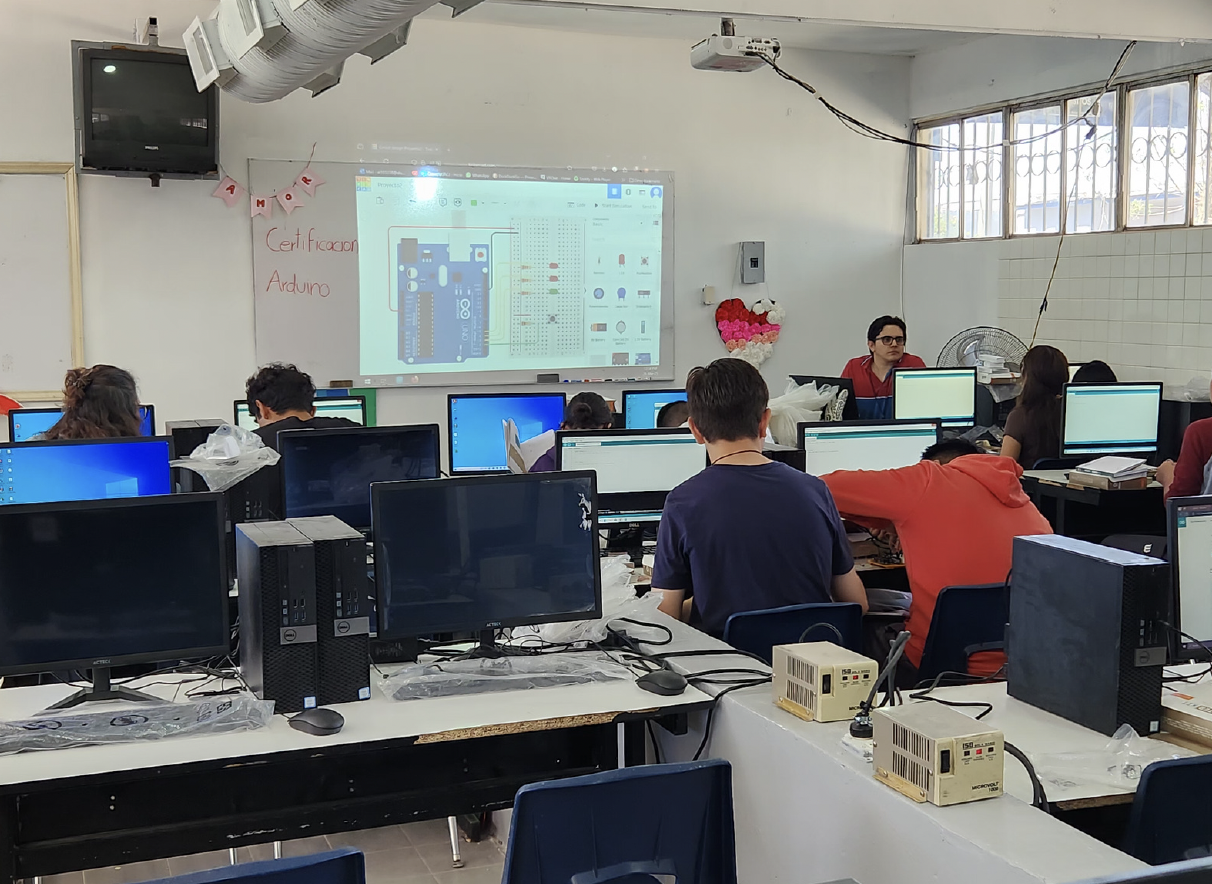
A. The course is carried out in public technical secondary schools. It begins with a pre-test, followed by theoretical and practical sessions where students learn electronics basics, Arduino programming, and robotics to build and control 15 educational projects developed by Arduino.
The students complete quizzes throughout the process to reinforce their learning. In addition to Arduino, we use Tinkercad for simulations and Google Classroom for content and group management. A final evaluation is then conducted for certification.
- Student age: 12–15 years (typical secondary school age)
- Arduino hardware: Arduino Starter Kit (Arduino Uno board, sensors, actuators, and essential components)
- Participants: 104 students, 4 secondary school teachers, 5 instructors from our staff
- Sessions: 52 sessions, each lasting ~2 hours
Q. What are the benefits for students, teachers, and schools?
A. Students gain in-demand skills in programming, electronics, and logical thinking, boosting academic profiles and opening doors to future studies and careers. It also strengthens their confidence and self-esteem.
Meanwhile, teachers learn a cutting-edge methodology to enrich their classes and motivate students. Certified teachers become knowledge multipliers, ensuring sustainability. The course also raises academic standards and helps schools to position themselves as innovation centers, attract more students, and demonstrate a strong commitment to quality education.
“The course raises academic standards and helps schools to position themselves as innovation centers”.
Q. What are the benefits of using Arduino hardware, software, and content?
A. Arduino’s open-source hardware and software are both beginner-friendly and highly accessible, which makes them ideal for introducing students to technology. Students can see their projects come to life, making learning exciting and tangible through practical application.
In addition, the global Arduino community provides tutorials, forums, and shared projects that teachers and students can use as valuable resources. This broad network broadens students’ horizons and helps inform their future decisions.
Q. What was the experience of students and teachers before, during, and after training?
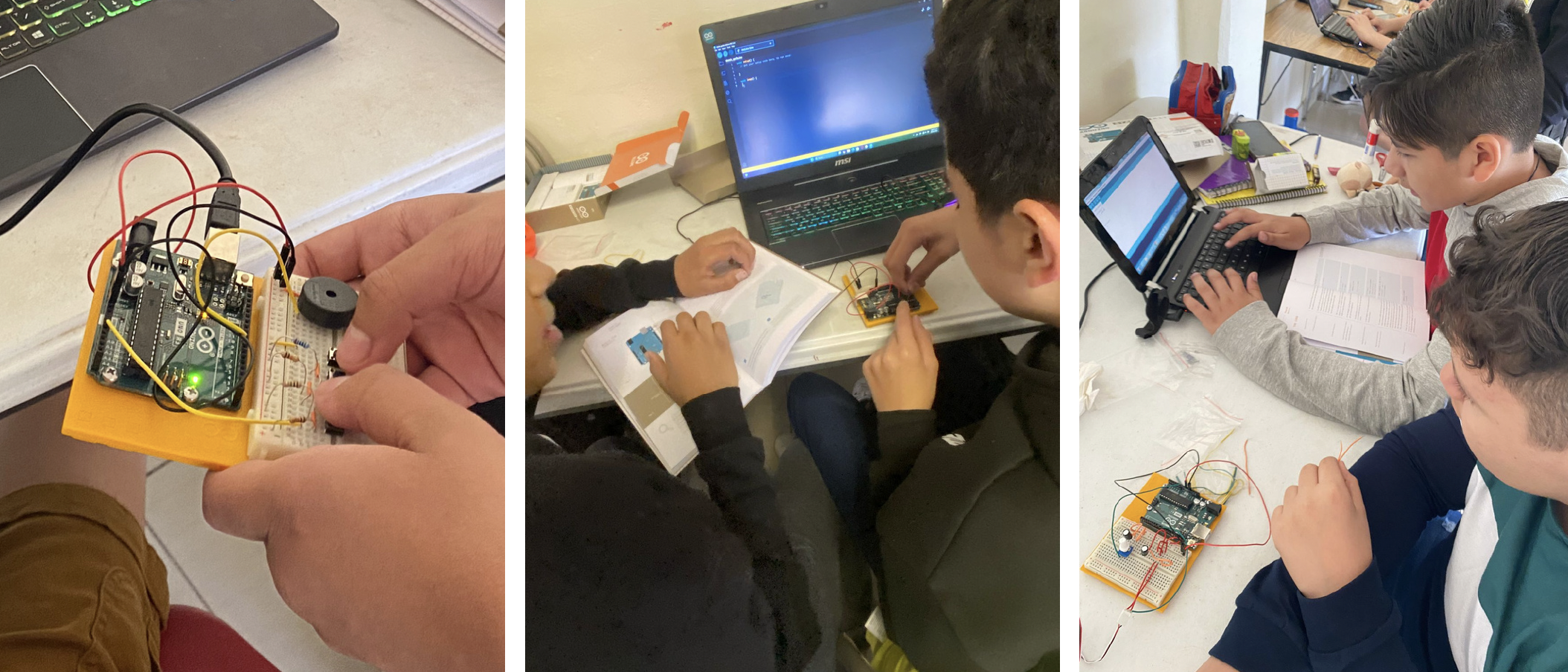
A. Before the training, there was a great deal of curiosity and enthusiasm among students and teachers, but also some doubts about their ability to grasp technical concepts. During the sessions, they faced a few challenges with programming logic and circuit connections. However, the hands-on approach helped them overcome these difficulties and take pride in their achievements.
After completing the training, we observed a clear transformation. Students felt empowered and confident in their ability to create and solve problems, while teachers gained the tools to replicate the model and continue inspiring future generations.
“Students feel empowered and confident in creating and solving problems”.
Q. What was your experience with Arduino hardware and software?
A. Arduino’s hardware and software were fundamental to the project’s success. Their versatility and the availability of components allowed for varied, engaging projects that kept students motivated. The reliability of the kits lets us focus on teaching without major technical concerns.
Q. Have you seen changes in students and teachers after training?
A. Yes. Both students and teachers now have a solid understanding of electronics, programming, and computational thinking. Most went from having no knowledge to completing guided projects, and are now prepared to create their own prototypes.
The most rewarding result has been seeing a significant increase in motivation toward STEAM subjects. Science and technology are no longer seen as “boring subjects,” but rather as creative tools for solving real-world problems. This shift in mindset is our greatest achievement.
“Science and technology are no longer seen as “boring subjects,” but rather as creative tools for solving real-world problems”.
Q. What were the results?
A. So far, 113 people have successfully completed the Arduino Certification. This includes 12 young people from the Juárez Institute of Technology, 74 students and teachers from local secondary schools, 5 staff team members, and 22 summer camp participants.
These results validate our model and motivate us to expand the project, giving more young people in Ciudad Juárez the chance to “program a brighter future.”
Q. What are the next steps?
A. By 2026, we plan to expand the project with both virtual and in-person courses. We are seeking sponsors and partners interested in supporting education for children and youth in vulnerable areas of Ciudad Juárez.
We also aim to reach the high school level, a critical time when young people choose technical or professional careers. We are exploring an alliance with Finder, a company that works with a programmable micro PLC powered by Arduino, to offer students industry-relevant knowledge.
To grow, we will focus on team expansion and collaborating with university students through social service. In addition, we will continue to upskill our team in technologies with industrial applications to better prepare students for the workforce.
If you’d like to support CEI4.0’s mission to empower young innovators in Ciudad Juárez, you can contact them through the organization’s different channels: