“Students lit up as their robot came to life”: How block-based coding and Alvik transformed learning at Istituto Sociale Torino
At Arduino, we believe that learning to code should be fun, accessible and inspiring for everyone. That’s why we recently introduced block-based coding for the Alvik robot.
To put this exciting new feature to the test, we teamed up with an enthusiastic group of students and teachers at Istituto Sociale Torino. Read on to learn more about their experience and discover how block-based coding with Alvik can transform STEAM education in your classroom.
Engaging students through hands-on learning
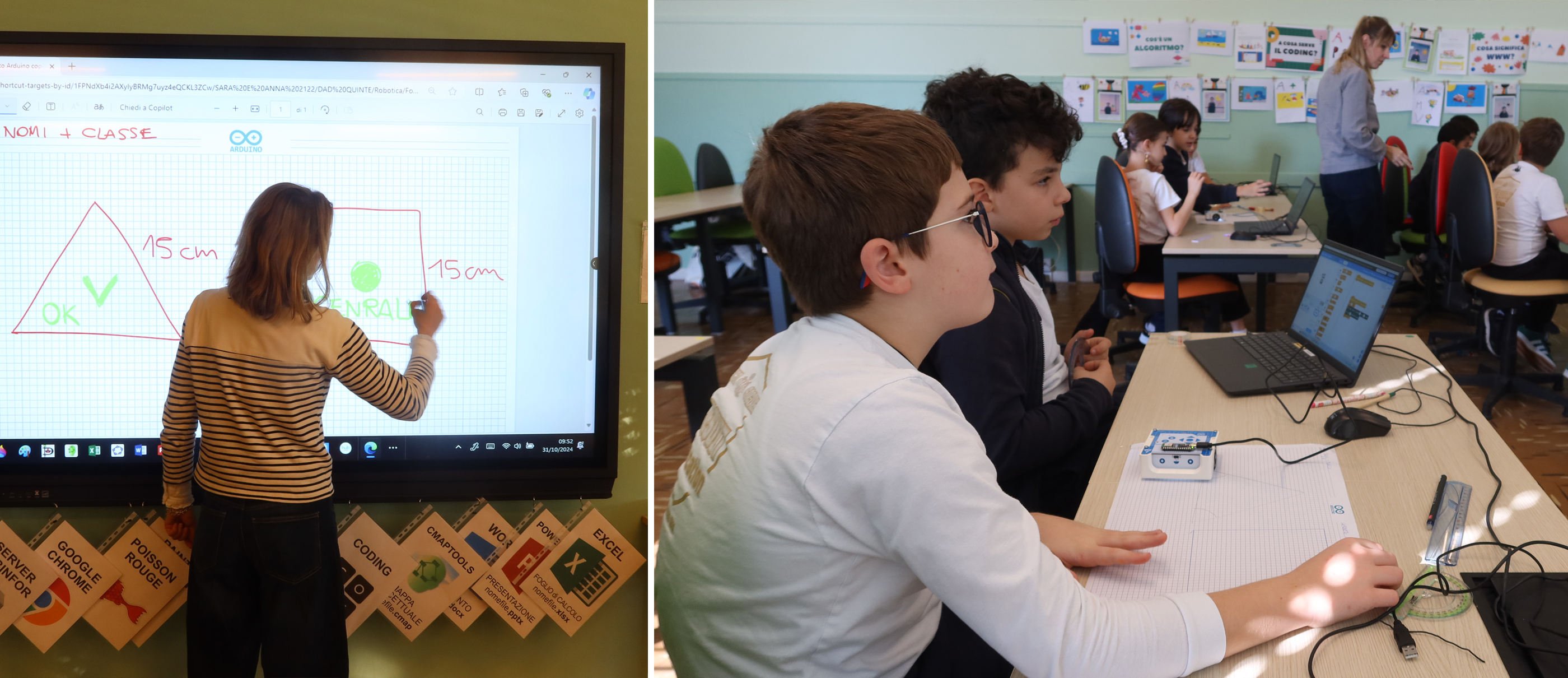
Istituto Sociale Torino is a Nursery, Primary and Lower Secondary School based in Turin, Italy. Earlier this year, 47 of their fifth-grade students and two teachers partnered with Arduino Education to explore the possibilities of block-based coding with the Alvik robot. In addition to introducing students to the basics of coding, the teachers used the technology to explore other key subject areas including mathematics and geometry.
It didn’t take long for Alvik to become a classroom favorite. The students, all aged between nine and ten, were especially excited by the interactive and hands-on nature of coding with Alvik (in Italian, they call Alvik “robotino” – which means their “little robot”). Teachers observed how the robot-based format encouraged participation and engagement, including amongst those students who were less familiar with the technology.
They also reported that the children lit up with excitement as their code brought the robot to life, either by changing its LED colors or setting it in motion. This instant feedback made complex concepts more approachable, keeping students motivated and focused. Students particularly enjoyed adding a creative twist to their projects, for example, by designing their own unique light patterns and customizing commands. Along the way, they discovered that it’s much quicker and easier to change a robot’s behavior with code than to modify its physical appearance (while Alvik can be personalized with LEGO, more ambitious designs might involve 3D printing, which takes time and effort).
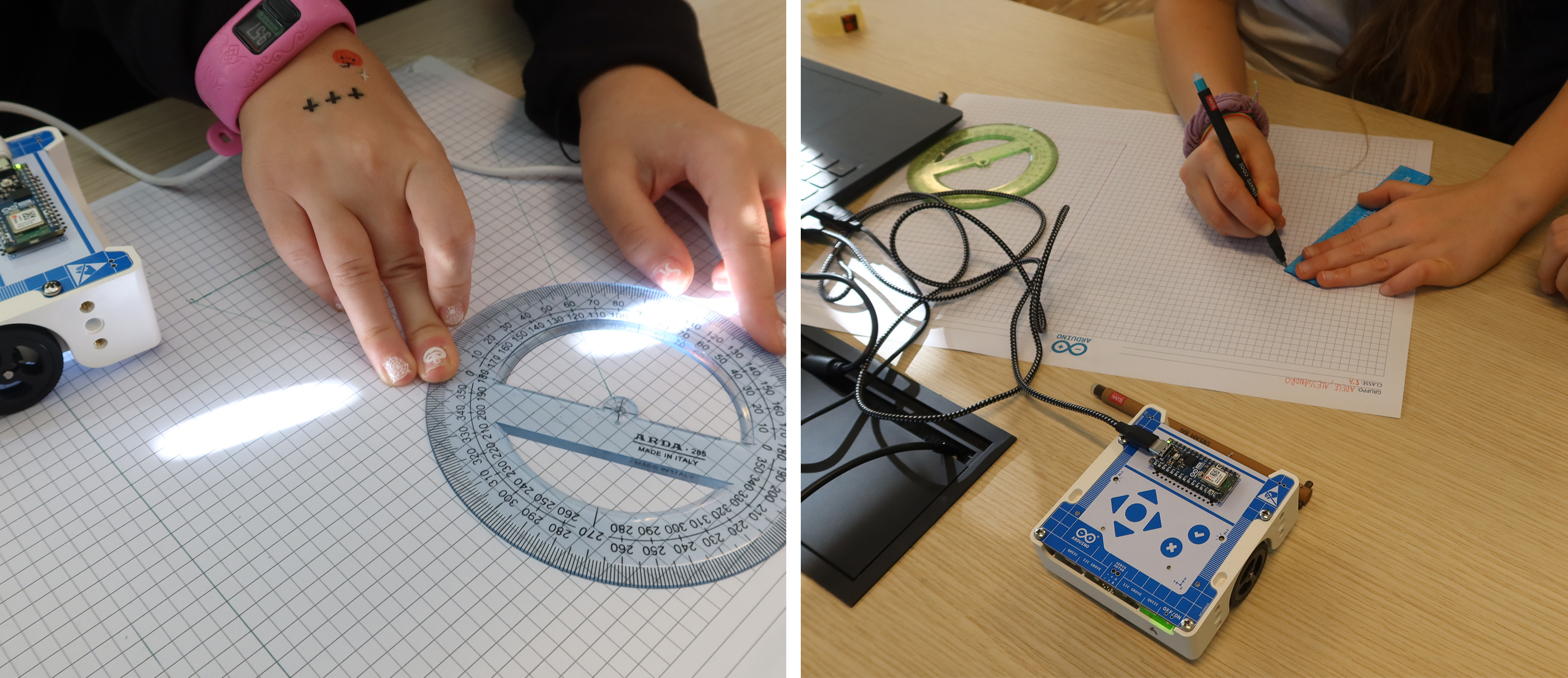
In contrast, adjusting a line of code can instantly transform how the robot behaves, making experimentation both fun and rewarding. And when things didn’t go as planned, it wasn’t a setback – just a chance to tweak the code and try again. Teachers reported that students found this kind of problem-solving far less frustrating than having to rebuild a physical model that had fallen apart or was off-balance.
The teachers’ take on the tech
The teachers were equally inspired by Alvik’s potential. They saw firsthand how the robot supported key STEAM-focused goals, helping students strengthen their logic, sequencing and problem-solving skills. Every session brought noticeable progress, with students not only mastering coding techniques but also gaining greater self-confidence.
Of course, as with any new educational tool, there were a few areas identified for improvement. For example, the teachers suggested that integrating Alvik more seamlessly into structured lessons could make it even more effective. Despite this, they were convinced that Alvik’s interactive design, combined with block-based coding simplicity, made it a powerful tool for collaborative and personalized learning.
With the release of the public beta version of the integration in mBlock, Alvik's new features and improvements will be implemented over time based on feedback from educators such as those at Istituto Sociale Torino.
A philosophy of innovation
The school is committed to equipping students with essential digital skills that will help them thrive in the modern world. From coding to 3D printing, students are learning how to think computationally, solve real-world problems and express their creativity in meaningful ways.
For these young learners, working with Alvik wasn’t just about mastering a new technology. It was about realizing that they have the power to bring their ideas to life. In a world where kids are surrounded by digital devices, this experience was a powerful reminder that they can control devices – not the other way around. And because block-based coding makes coding so easy and accessible, every child was able to dive in and start experimenting with their “robotino!”
Key takeaways: how block-based coding with Alvik can transform learning
The collaboration between Arduino Education and Istituto Sociale Torino offers valuable insights into how block-based coding with Alvik can transform learning:
1. Building confidence at an early age
Block-based coding eliminates common frustrations like syntax errors, enabling young learners to focus on the task in hand. Students at Istituto Sociale Torino experienced early success as Alvik followed their commands, boosting their confidence and nurturing their love for coding.
2. Facilitating interdisciplinary learning
Alvik and Arduino’s dedicated educational platform make it easy to combine coding with other subjects. By working their way through Arduino's engaging Block-Based Coding and Robotics lessons, teachers reported that students were able to better understand complex subject areas like mathematics and geometry.
3. Encouraging creativity
Alvik’s compatibility with LEGO® Technic™ and M3 screw connectors allows students to customize and build unique projects, effectively turning the robot into a canvas for their imagination.
4. Supporting the transition to text-based coding
Block-based coding with Alvik isn’t just a starting point – it’s a bridge to more advanced programming. Students can transition to text-based coding languages like MicroPython with a single click, building on their skills at their own pace.
Ready to try block-based coding in your classroom?
The Alvik in mBlock and can be accessed at ide.mblock.cc. Or visit our online store to buy the Arduino Alvik robot today.
Alternatively, if you’d like to contact a local distributor you will find a list of education partners here.