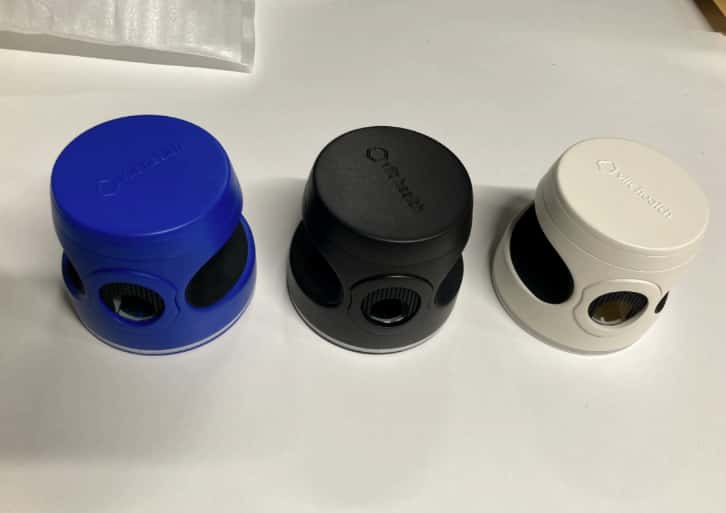
Traditional finger-prick methods are uncomfortable, discourage frequent testing, and depend on costly disposable test strips or continuous glucose monitors (CGMs). That’s why Viit Health, a company specializing in non-invasive glucometry research, partnered with Softeq – leaders in embedded tech and Edge AI – to create a proof-of-concept (POC) prototype utilizing near-infrared spectroscopy (NIR) to measure blood glucose levels without drawing blood.
Before regulatory approval, the technology needed extensive testing and refinement. The client aimed to develop a working prototype to prove the feasibility of NIR-based glucose sensing, enable real-time glucose measurement with AI-driven spectral analysis, use the prototype to guide the development of a dedicated medical device, and provide data validation for future clinical trials and regulatory approval.
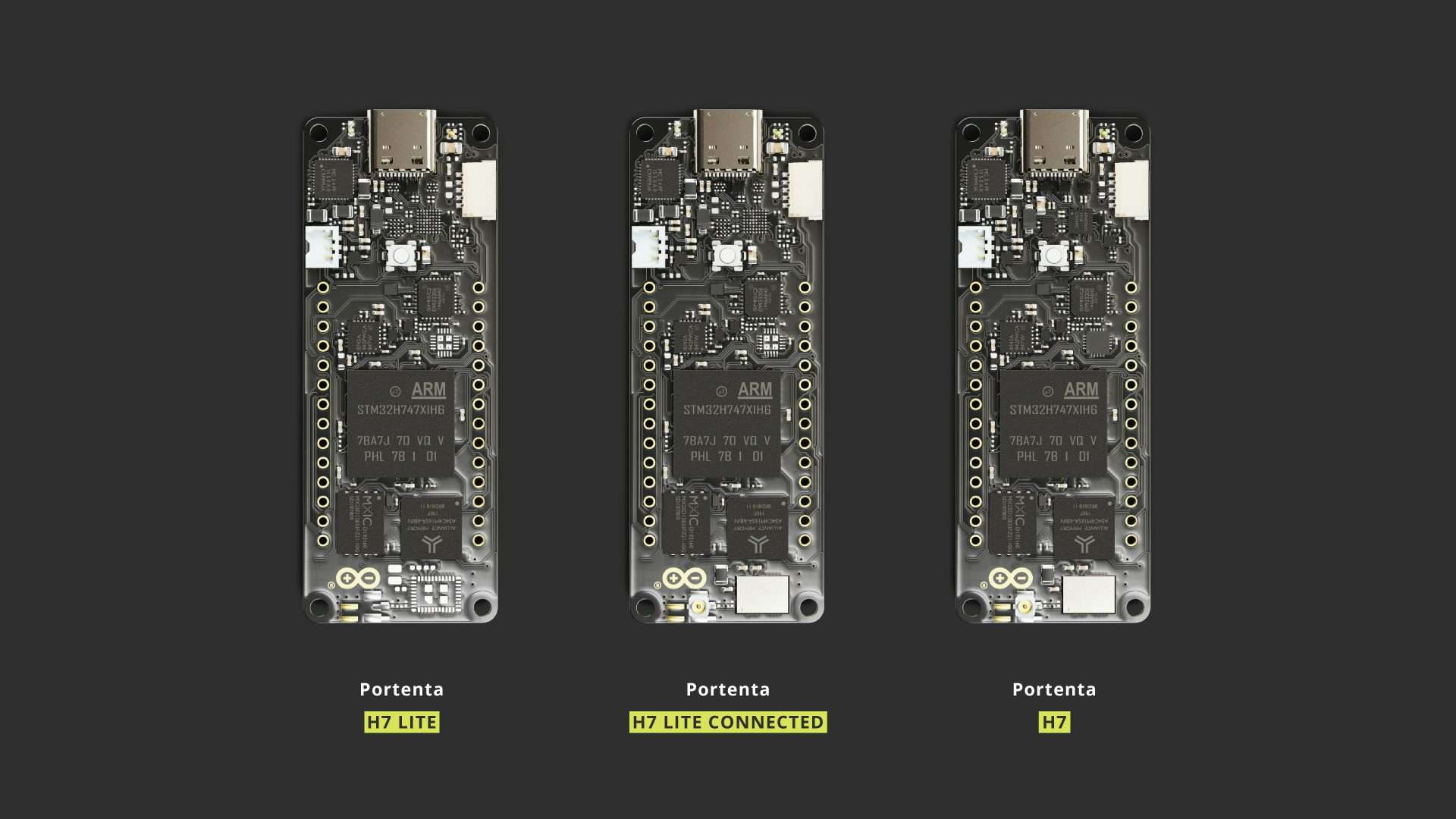
“The Arduino Portenta H7 proved to be an ideal platform for Softeq to rapidly prototype next-generation electronics for Viit Health’s non-invasive glucose monitoring device. Its dual-core architecture and native support for AI/ML enabled the performance and on-device data analysis enhancements necessary to improve accuracy and deliver a better user experience. This reduced the prototyping process by 25% and accelerated Viit Health’s path to production and clinical trials.”
– Paul Fruia, Senior Advisor at Softeq
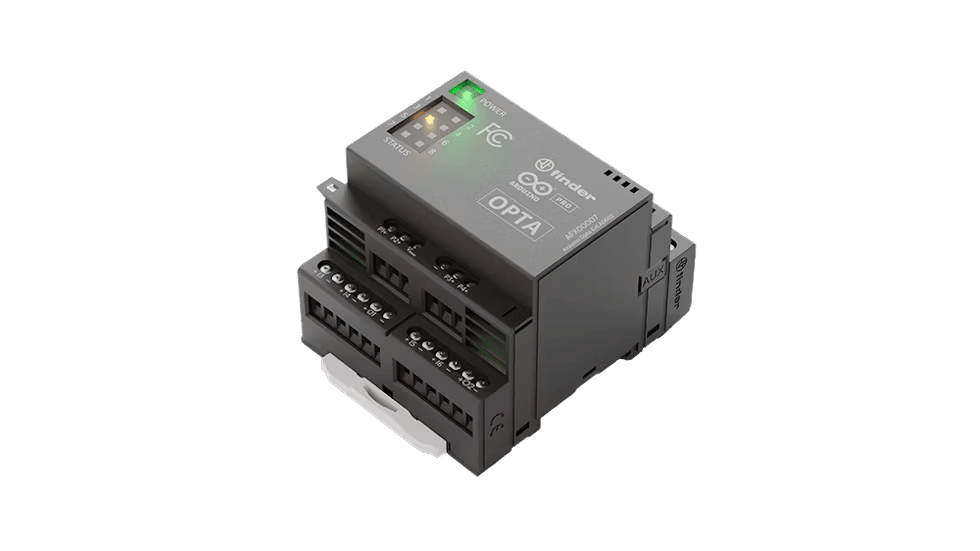
Their compact solution – approximately the size of a shoebox, and just about 5 kilos or 10 pounds in weight – integrates Opta and Arduino Cloud to connect to equipment across an entire facility to monitor loads, manage inverters and generators, optimize switching cycles, and balance power usage with renewable energy sources.



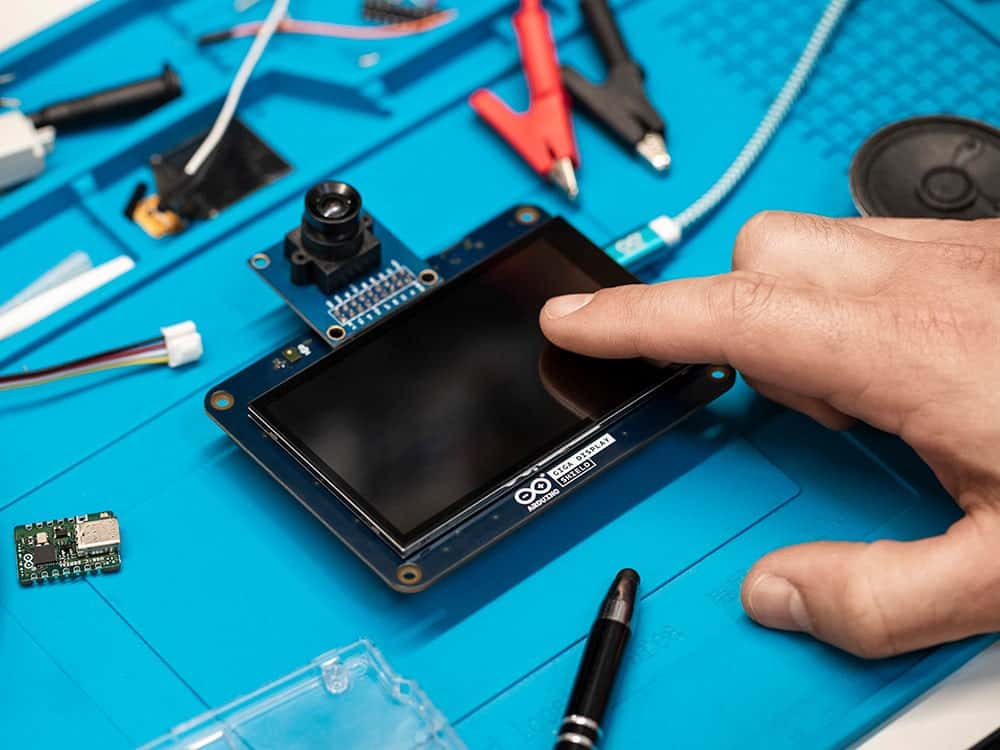
Portenta H7’s dual-core ARM® architecture (Cortex-M7 @ 480MHz + Cortex-M4 @ 240MHz) enables high-speed spectral processing and runs AI inference models for machine learning, supporting real-time glucose estimation from spectral data. It also provided Softeq with the flexible hardware integration needed for rapid assembly and testing, and features the low power consumption required for portable medical device development. The GIGA Display Shield touchscreen was a natural complement to complete the prototype, providing a 3.97-inch touch screen for user-friendly data representation and navigation.

Viit Health’s goal is now to optimize the dedicated medical device by refining form factor and performance based on clinical trial feedback, expand clinical trials to gather larger datasets for further validation, and progress toward FDA/CE approval for market adoption.