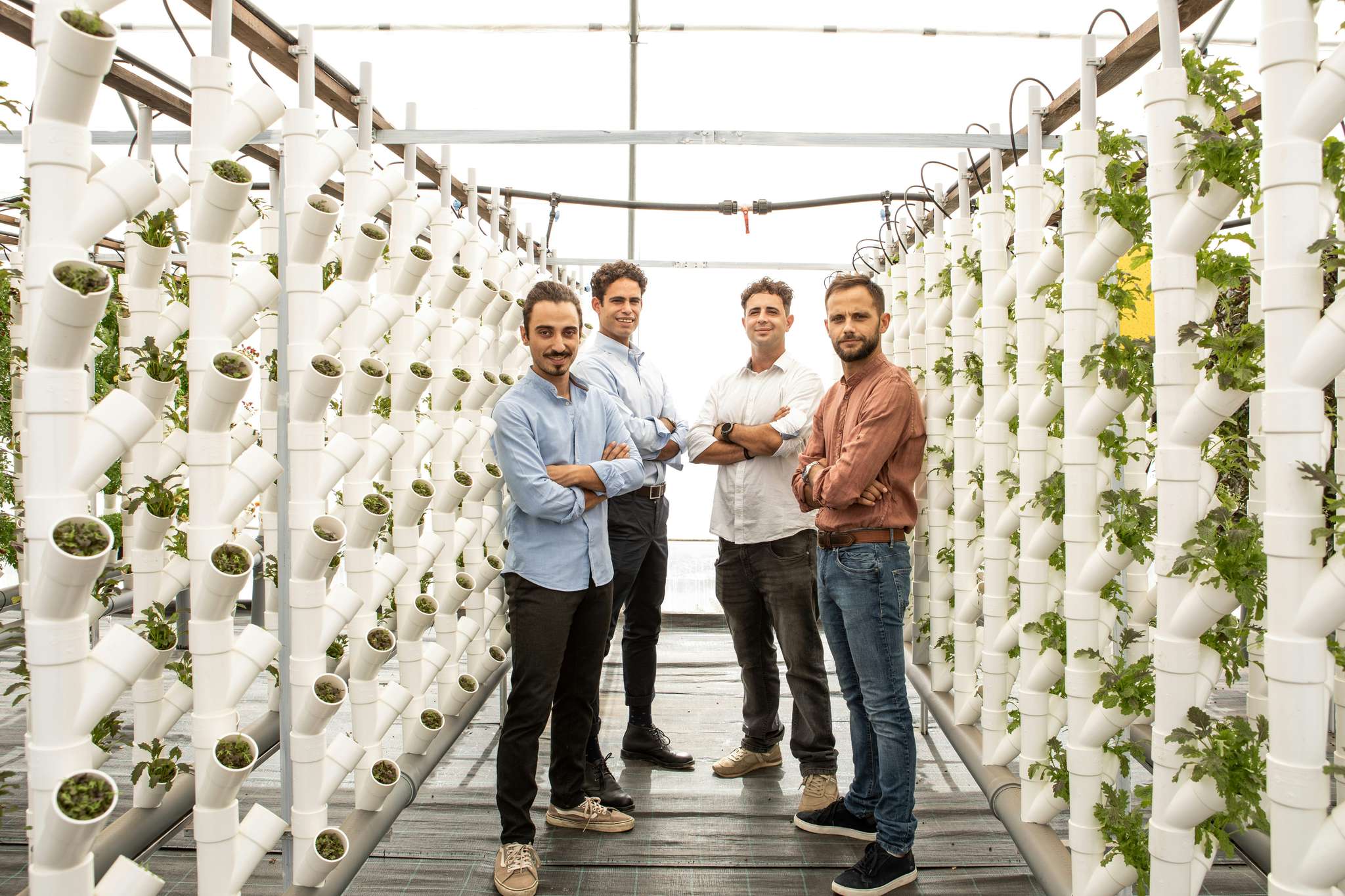
Aquaponics requires keeping strict and specific balances in check for fish, biofilters, and plants to coexist in delicate ecosystems – a particularly difficult achievement when scaling a business.
The Circle has successfully tackled this challenge. Operating one of Europe’s most advanced commercial aquaponic facilities, the company manages a 12,500 m² greenhouse near Rome, with over 150,000 plants grown in vertical NFT (nutrient film technique) systems. One of the secrets to their success was how they faced a context where even minor deviations in water quality, temperature, humidity, or flow rates could quickly impact yields, consistency, and supply continuity to more than 200 restaurants and hotels.
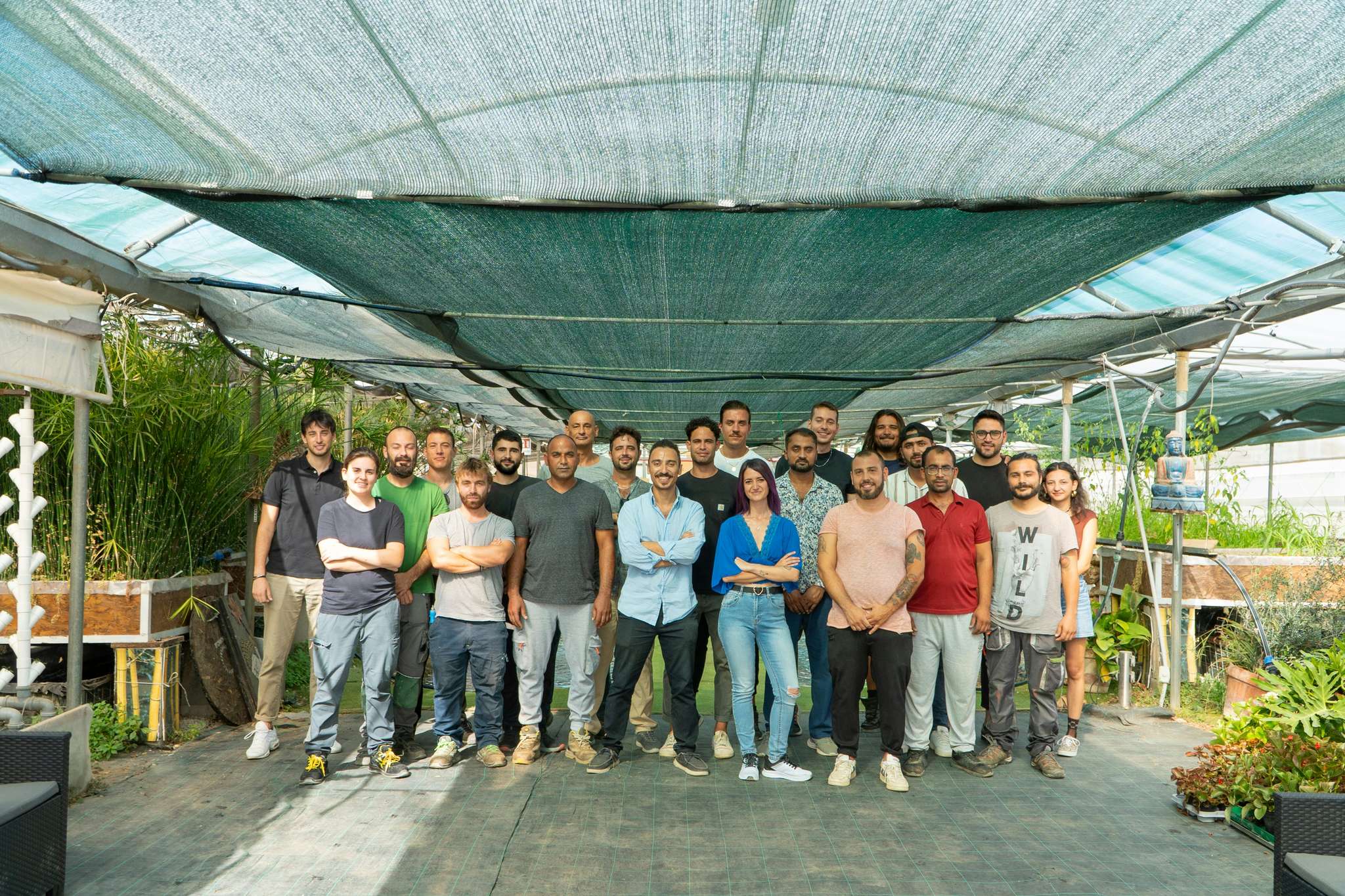
Instead of resorting to manual monitoring, which would magnify labor intensity and risk of human error, or adopt traditional industrial control systems that could be too rigid, expensive, and slow to adapt, The Circle decided to create their own solution. A customizable, scalable, and real-time control architecture capable of managing thousands of interconnected variables with minimal water use and zero chemical inputs.

Leverage an open-source industrial platform to build a custom, scalable IIoT architecture

Achieve edge control with real-time monitoring
Quickly move from rapid prototyping to deployment

Create their own cost-efficient industrial automation solution with zero vendor lock-in
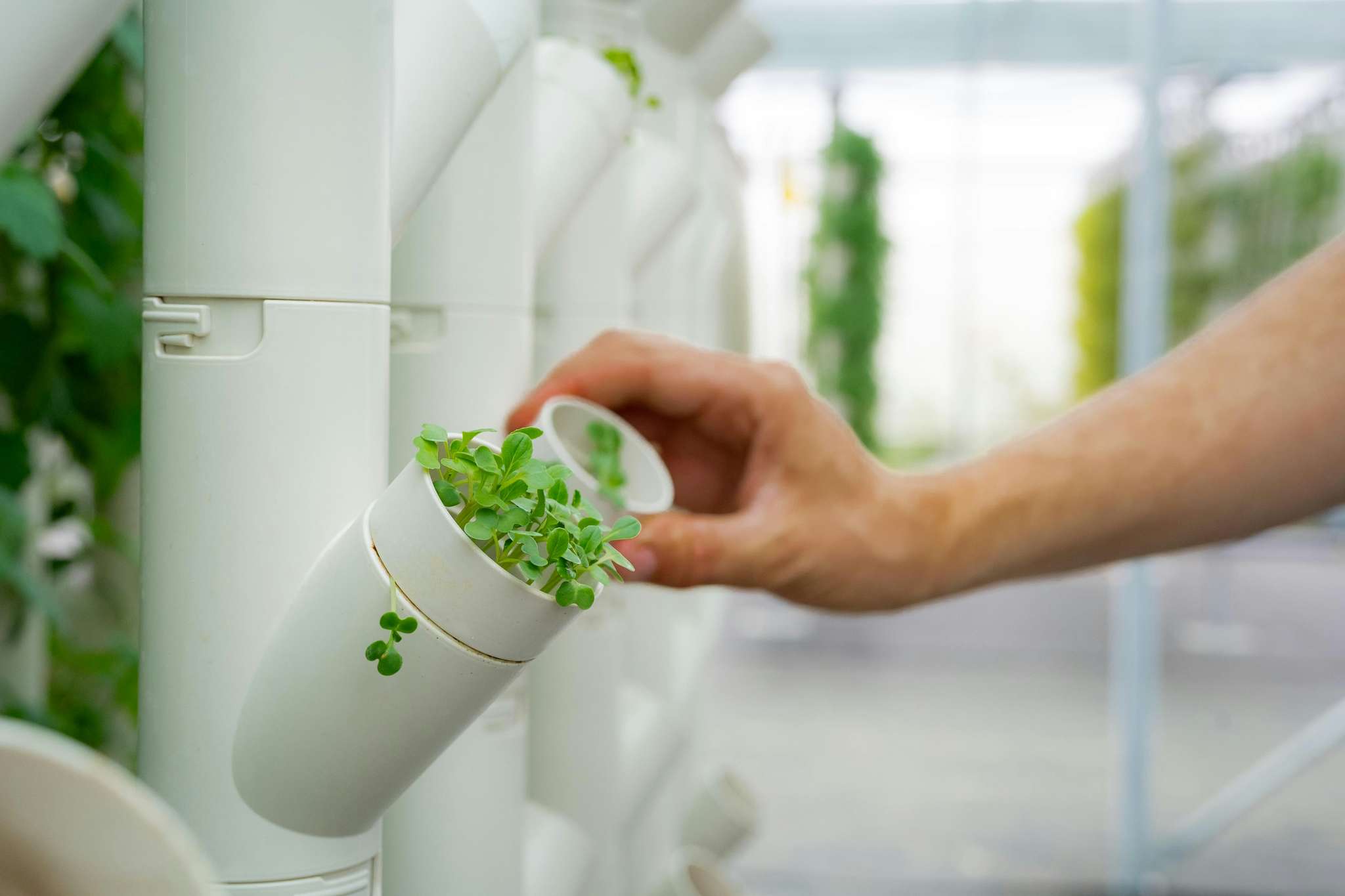
The Circle built its monitoring and actuation system using Arduino, moving seamlessly from prototyping to field deployment with an open, flexible platform.
Choosing the Opta microPLC as the system’s industrial backbone allowed the team to design devices tailored specifically to their aquaponic and vertical farming processes rather than adapting their operations to off-the-shelf controllers.
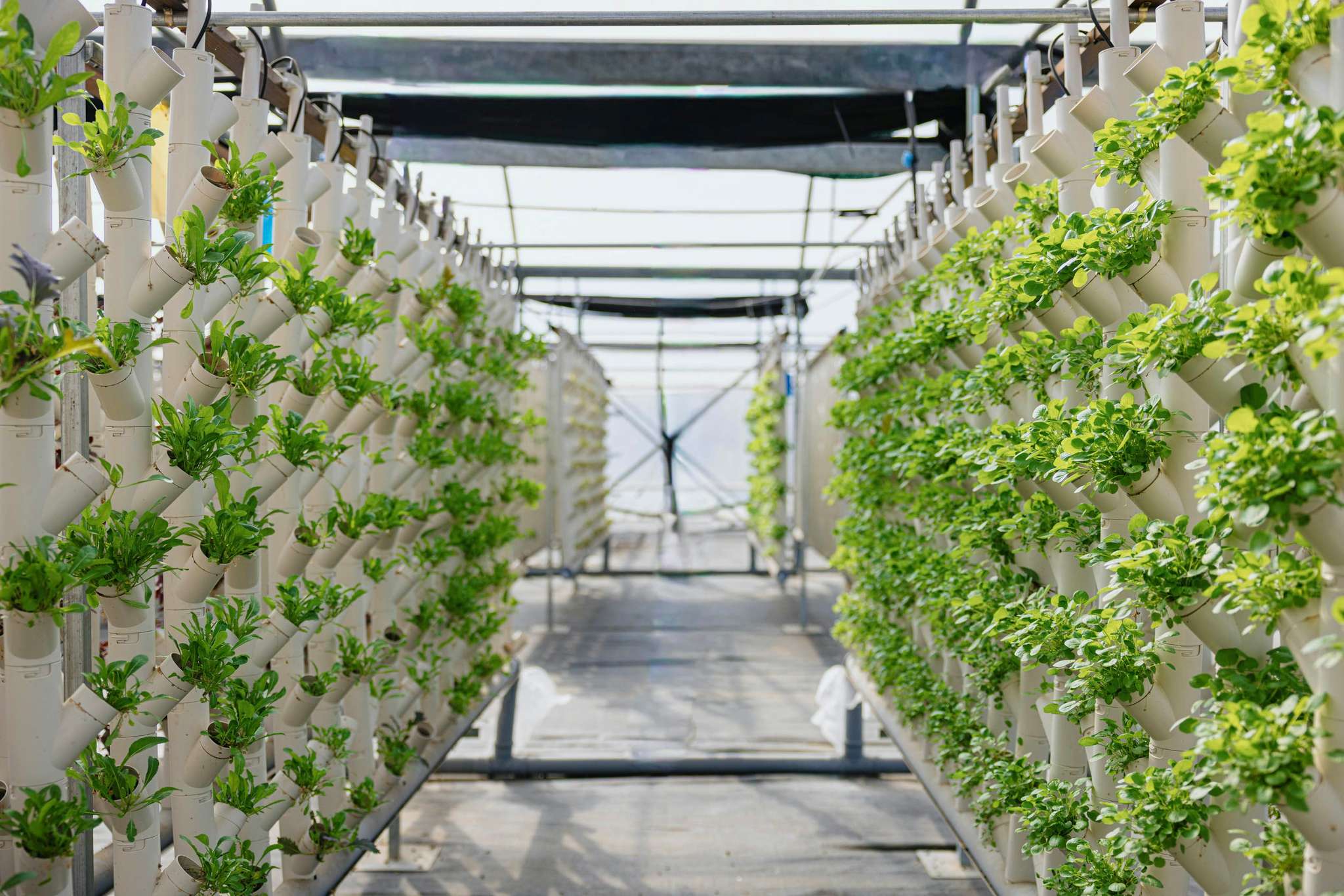
Now, Opta enables real-time monitoring and control of water quality, climate parameters, pumps, valves, lighting, and flow rates across modular systems. During development, the openness of the ecosystem allowed The Circle’s technical team to iterate rapidly, maintain full control over the architecture, and avoid dependency on proprietary systems or external integrators, while still achieving industrial reliability.
“Without the flexibility and openness that Arduino offers, we simply would not have been able to create a control architecture so closely tailored to our processes. From a cost perspective, moving from proprietary, ready‑made controllers to our own Arduino based devices has led to an estimated cost reduction of more than 70%, while at the same time giving us much finer control over how the system behaves.”
– Simone Cofini, CTO & Co‑Founder, The Circle
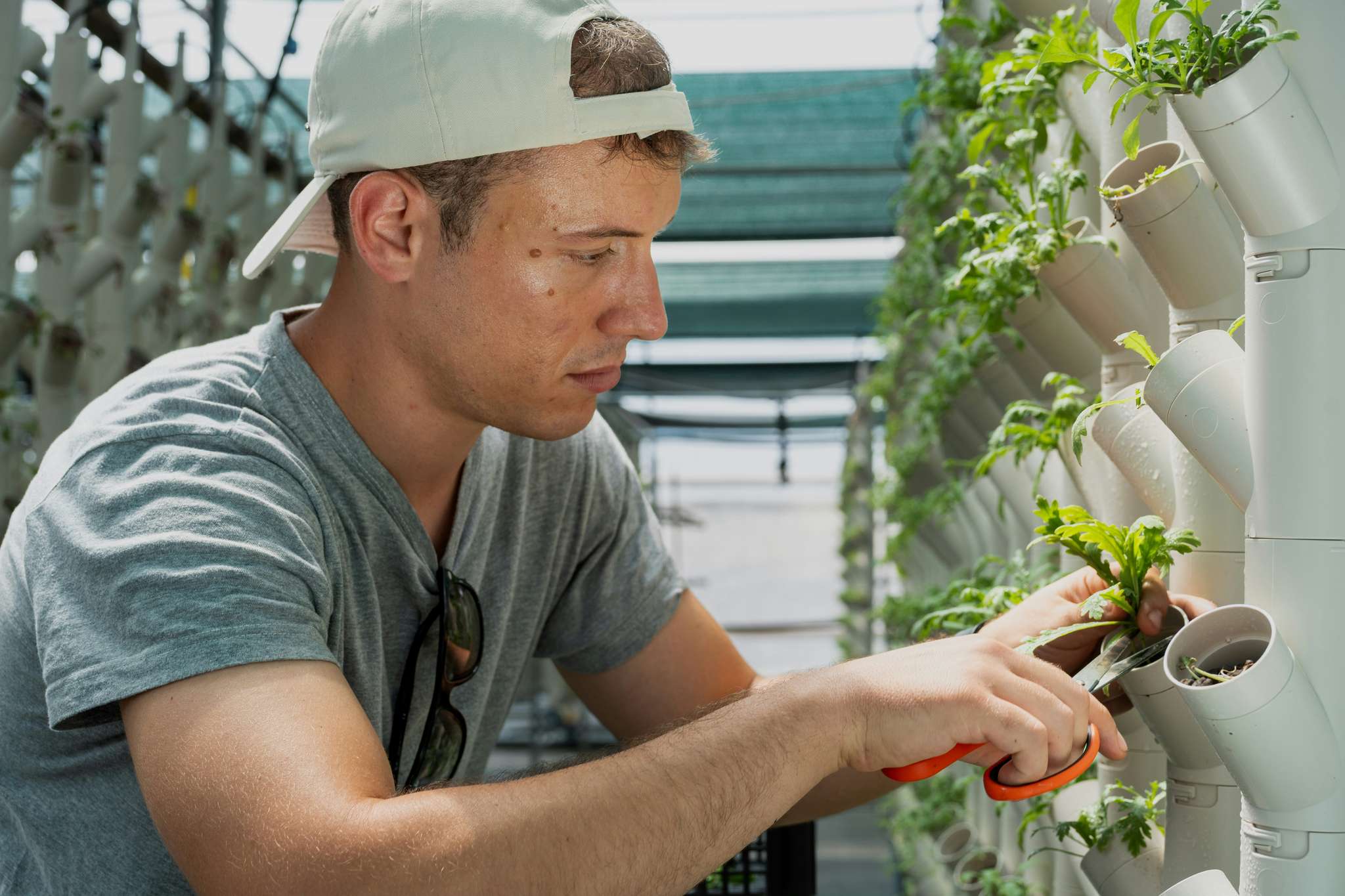
With a robust and replicable control system in place, The Circle plans to keep Arduino as a core component of all future expansions, both at the main site and in new international projects.
The company is now positioned to scale its “from zero impact to positive impact” agricultural model, confident that its technology stack can grow and adapt alongside new production lines and business opportunities.
Arduino and Opta are trademarks or registered trademarks of Arduino S.r.l.